Casey Key's Turtle Season Didn't End in August. It Just Got Quieter.
September 24, 2026
September 24, 2026
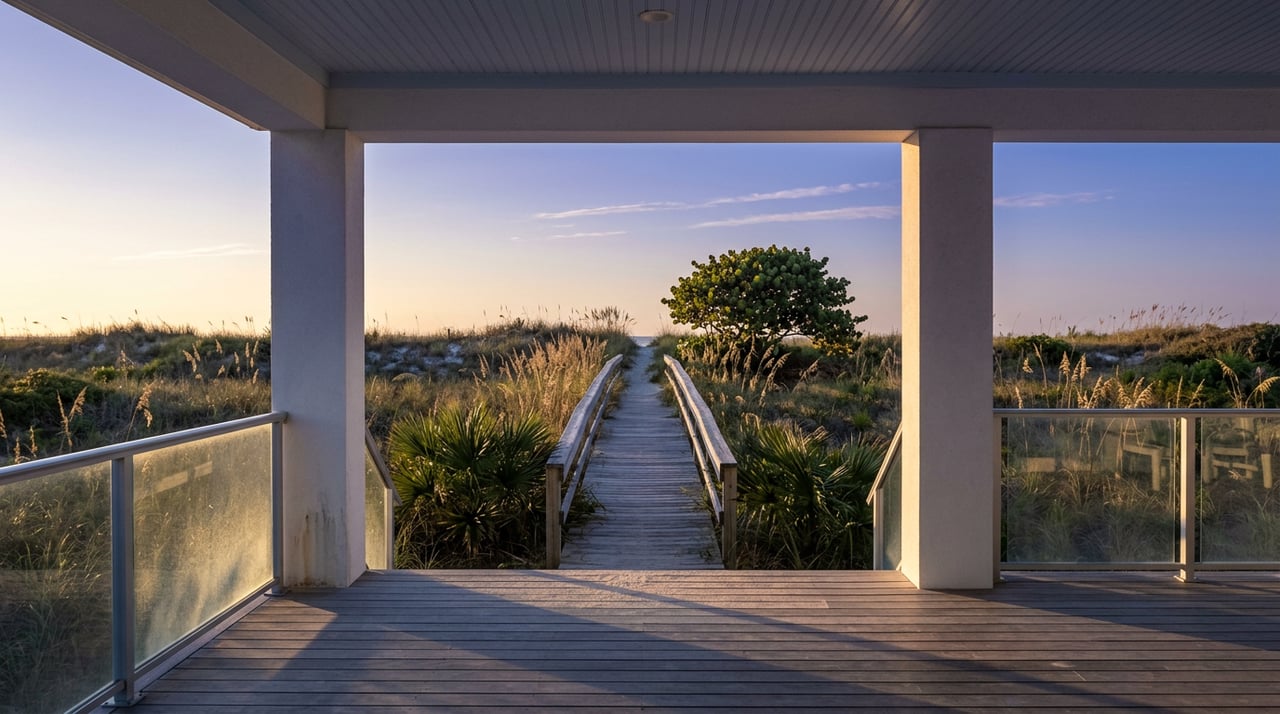
As Visit Sarasota reports, "When there are lights on or near the beach, it can override turtles' natural instincts," says Melissa Bernhard, a senior biologist with Mote Marine Laboratory's sea turtle conservation program. It's a line easy to nod past in June, when the beach is busy and every nest feels like a headline. It matters more in late September, when the crowds have thinned and the excitement has faded, even as hatchlings are still making their way to the water.
If you live on Casey Key, you probably think of turtle season as a spring and early-summer thing. New nests, yellow stakes appearing in the sand, maybe a photo on a neighbor's group chat. By Labor Day, the feeling on the key is that the season has wound down. That feeling is wrong, and the reason it's wrong is worth understanding if you want to actually watch what's happening on this stretch of shoreline right now.
Mote's Sea Turtle Conservation and Research Program patrols 35 miles of beach from Longboat Key down through Venice, a stretch that includes Casey Key, daily from mid-April through October 31. For the first several months, the work is about finding new nests: crawl tracks in the sand, a female loggerhead's unmistakable trail from Gulf to dune and back. That's the part of the season people notice.
As of early September 2026, that phase is winding down across the patrol's territory. According to reporting from Your Observer, Longboat Key alone had recorded 1,306 nests this year, about 26 percent of all nests found across Mote's entire coverage area, and volunteers were already shifting from daily new-nest surveys to what the patrol calls "spot checking," where they track only the nests already laid to see whether hatchlings make it to the water. That shift happens on Casey Key too, on the same calendar, under the same protocol.
Spot checking sounds like a downgrade. It isn't. It's arguably the harder half of the job, because a nest that survived incubation can still fail in its last hours if a hatchling gets disoriented crawling toward the wrong light instead of the Gulf.
Here's the number that complicates the easy version of this story. In 2025, Mote's patrol recorded 5,736 nests across its 35 miles of beach, the largest season the program has ever documented. That's the number that gets repeated at dinner parties and in newsletters. It sounds like unambiguous good news.
The same year also set a different record: 717 disorientation events, the highest number Mote has ever documented in a single season. Disorientation is what happens when a hatchling, guided by instinct toward the brightest visible light, heads toward a porch lamp or a parking lot instead of the moonlit Gulf. More nests did not mean more nests handled well. It meant more chances for something to go wrong in the final hundred feet of a turtle's first hour of life, and more of those chances turned into actual problems.
That pairing, a record nesting year and a record disorientation year, is the detail that should change how residents think about the weeks ahead. The nesting numbers are mostly out of anyone's hands. The lighting numbers are not.
If you walk Casey Key's shoreline this month, here's what you're likely to see, and what it means:
None of this requires a resident to do anything dramatic. It requires the same thing it required in June: keeping beachfront lighting turtle-friendly, closing blinds facing the water at night, and leaving flagged nests alone. The 717 number is a reminder that beachfront lighting matters throughout the season.
There's one corner of Casey Key where this seasonal quiet runs right up against the island's liveliest fixed point: Casey Key Fish House, sitting beside the historic Blackburn Point Swing Bridge at the key's north end, in operation since 1997. It's the kind of old Florida waterfront spot where the dining room looks out over the water on one side and a chickee-style tiki bar anchors the other, the sort of place where regulars know the longtime bartender by name, Skeeter, and where boats tie up at the dock for lunch as easily as cars pull into the lot.
The Fish House isn't part of the turtle patrol's story in any official sense. But it sits inside the same protected shoreline, on the same island, under the same county code, and its rhythm this time of year tells you something about how Casey Key actually works day to day. The tiki bar still draws a Saturday evening crowd, live music still drifts across the water, and the bridge beside it still swings for boat traffic the way it has for decades. That liveliness and the dark, quiet vigilance happening a few hundred yards down the beach aren't in tension. They're two versions of the same island, coexisting the way they do every fall, one loud and social, one silent and exacting.
Through October 31, Mote's patrol keeps walking Casey Key's stretch of beach, checking on nests laid months ago, watching for the tracks hatchlings leave when they finally make their run for the Gulf. The public can follow the season's weekly numbers directly through Mote's own updates, which is worth doing if you want more than the anecdotal sense of "things have quieted down."
What the record-nest, record-disorientation year of 2025 actually shows is that the easy narrative, more turtles nesting means more turtles thriving, isn't automatically true. The number that matters most on Casey Key right now isn't how many nests were laid. It's how many porch lights get switched off before the hatchlings that are left decide which direction is home.
That's the kind of detail that doesn't show up if you only pay attention to the season's loud months. It's also the kind of detail that makes living on Casey Key feel different from visiting it: you get to notice the quiet parts too.
If Casey Key's rhythm, the tide of turtle season, the regulars at the Fish House, the swing of the old bridge, is the kind of daily texture that makes you want to know this island better, GiGi Kuster has spent more than two decades learning exactly that kind of detail about Sarasota's barrier islands. Create Your Sarasota Lifestyle.
This article is general information, not legal, tax or financial advice. Consult a qualified professional about your situation.
Get assistance in determining current property value, crafting a competitive offer, writing and negotiating a contract, and much more. Contact me today.