Downtown Sarasota & The Bay Park in 2026: What Holds
August 13, 2026
August 13, 2026
Two decisions came out of Sarasota City Hall this summer. One lasted five weeks before the City Commission killed it. The other cannot be undone for the next two decades, and the commission had almost nothing to do with it.
If you live downtown, you probably noticed the first one. New parking signs went up in June. Enforcement hours stretched from 9 a.m. to 8 p.m. into an 8 a.m. to midnight window, six days a week, with paid Sunday enforcement starting at 1 p.m. and round-the-clock rules in the parking decks. Business owners hated it, and by early August the city had backed down. What most residents missed is the quieter story happening two blocks away at The Bay, where a new set of boat docks just became one of the only things downtown that a future commission cannot touch, tax, or take back. Understanding why tells you more about how this neighborhood actually gets built than either headline does on its own.
The extended parking enforcement rules took effect June 29. By August 3, the City Commission had voted unanimously to suspend them, keeping only the higher fine amounts in place while it figures out another way to fund the parking program. Business owners had complained that expanding paid and enforced hours from the original 9-to-8 window to 8 a.m. through midnight, plus Sunday afternoons and 24/7 enforcement in the decks, was driving customers away.
The pushback came with names attached. Sarasota Med Spa owner Catherine Hermes told commissioners the presentation behind the plan carried the tone of a man with an anvil around his neck. Chris Voelker, who owns State Street Eating House and Cocktails, reminded the room that downtown's current energy took decades of investment and risk to build. Cafe Amici manager Nicholas DiIelsi called the reversal a sign that the downtown community's voices were heard. St. Armands Circle Association Executive Director Rachel Burns pointed out that parking complaints had already crossed the Ringling Bridge and become the top issue merchants hear from visitors there too.
The city has scheduled a public open house for 5:30 p.m. on August 24 and a commission workshop for 9 a.m. on August 31, both at City Hall on First Street, to figure out what comes next. If you park downtown regularly, those are the two dates worth putting on your calendar this month, not because the outcome is settled, but because it clearly isn't.
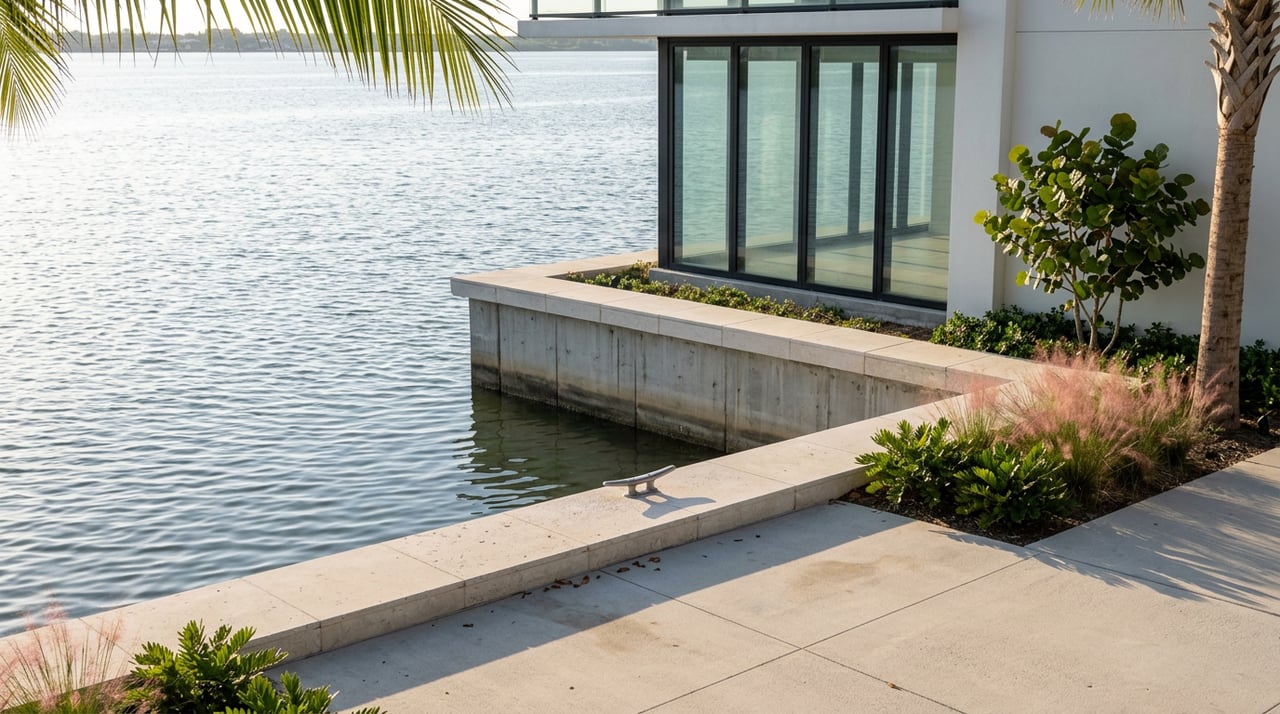
While that fight was playing out in public, something more permanent was already locked in at the water's edge. A new floating day dock along the refurbished south seawall in the 10th Street boat basin was approved this past May as part of The Bay park's second phase. The original plan called for a $2-per-hour fee. The city removed it before the dock ever opened.
The reason has nothing to do with local politics. Because the day dock construction was partially funded with federal dollars, the city is legally barred from charging fees there for at least 20 years. Boaters can tie up for up to five hours at no cost, and no future commission vote can change that math until sometime in the 2040s. Compare that to the parking enforcement rules, which a single commission meeting created in May and another commission meeting erased in August. One policy is durable because a federal grant condition made it durable. The other was provisional the moment it depended on local political appetite.
The Bay's second phase carries a $65 million price tag, with $48 million coming from a city bond backed by tax increment financing and the remaining $17 million from grants and private sources, according to the park's own accounting. That TIF district, established in fiscal year 2020, was originally projected to generate about $190 million over its 30-year life. By fiscal year 2026, rapid redevelopment at The Quay and the Rosemary District had nearly doubled that projection, because TIF revenue is drawn from the rising taxable value of property around the park, measured against a 2019 baseline.
That overperformance is precisely why the county has grown careful. Rather than commit fully to Phase 3 funding, county commissioners approved only half their share of the fiscal year 2027 debt service payment tied to work at Centennial Park, a cautious $282,000 down payment on a larger commitment they haven't fully made yet. Commissioner Teresa Mast called it a nice problem to have, one where the project's success is outrunning the comfort level of the people funding it.
Here is the pattern worth sitting with: the parking program was funded by a fee structure the city controlled and could reverse in a single meeting. The Bay is funded by a tax mechanism tied to property values the city does not directly set, moving on a 30-year clock the city cannot shorten. One is a lever. The other is closer to a law of physics. If you're trying to predict what downtown looks like five years from now, the second mechanism tells you more than the first ever will.
The visible progress backs this up. Design and construction on Phase 2's three remaining components, the Canal District, the Cultural District, and the Resilient Shoreline, are underway with a targeted 2027 finish, according to an August 6 Your Observer report. The Sunset Pier project has been shelved for cost and timing reasons, but the Resilient Shoreline, continuing the conversion of roughly a mile of bayfront into living, storm-resistant shoreline, is slated to open this year, alongside Town Square, a shaded gathering and performance space at the midpoint of the park's Promenade.
The park's first sit-down restaurant is already spoken for. Bay Park Conservancy Founding CEO AG Lafley confirmed a partnership with Venice Pier Group, the operator behind Sharky's On The Pier and Fins at Sharky's, to build a waterfront restaurant on the former U.S. Coast Guard station site at the edge of the boat basin, with construction and the opening both targeted for 2027.
None of this is guaranteed to finish on schedule. To close the gap, the Gulf Coast Community Foundation launched a $2 million challenge match on August 6, seeded by a $1 million grant that anonymous donors doubled, matching public donations dollar for dollar through June 30, 2027, in hopes of raising $4 million toward completion. More than 1.2 million visitors have come through The Bay since its first phase opened in October 2022, a number that gives the fundraising pitch some weight.
Not everything downtown is being renegotiated this summer. The Sarasota Farmers Market has run every Saturday from 7 a.m. to 1 p.m., rain or shine, since 1979, centered at Main Street and Lemon Avenue and stretching to First Street on the north end and Pineapple Avenue on the south, with additional vendors set up along State Street. It's the one fixture in this neighborhood that neither a commission vote nor a federal grant condition has touched in nearly half a century, and it's still where most people downtown start their weekend regardless of what's happening two blocks away at the water.
Watch what survives a reversal, not just what gets announced. The parking rules that generated the most headlines this summer are also the ones with the shortest half-life, subject to whatever the commission decides at its August 31 workshop. The day docks nobody was arguing about in public are locked in until the 2040s because of a funding technicality nobody debated. If you want to understand which parts of downtown Sarasota's current momentum are durable and which are one budget cycle away from changing, follow the money mechanism, not the press release.
Ready to talk about what any of this means for your own plans in downtown Sarasota or the barrier islands nearby? GiGi Kuster has spent years tracking exactly these kinds of shifts on the ground. Create Your Sarasota Lifestyle.
Get assistance in determining current property value, crafting a competitive offer, writing and negotiating a contract, and much more. Contact me today.