Relocating to Sarasota From Abroad: Your Step‑By‑Step Guide
January 15, 2026
January 15, 2026
Buying in Sarasota from another country can feel complex, especially when you’re coordinating time zones, funds, and documents from afar. You want a smooth process, clear steps, and a trusted local guide who understands luxury coastal living and remote closings. In this guide, you’ll get a practical, step-by-step timeline tailored to international buyers so you can plan with confidence and enjoy the journey from first search to keys in hand. Let’s dive in.
Typical contract-to-close in Florida is about 30 to 60 days for conventional transactions, faster for all-cash. If you plan to finance, allow extra time for underwriting and document authentication.
Decide early if you will pay cash or use a mortgage. Many lenders offer foreign national loans, but they often require larger down payments, commonly 30 to 50 percent. Cash purchases can simplify your timeline and strengthen your offer in competitive situations.
Collect essential IDs and financials: passport, bank statements, proof of funds, tax returns, and employment or income letters. If you’re financing, ask your lender about acceptable foreign credit documentation and whether certified translations or apostilles are required. Organize these files so you can respond quickly to lender requests.
Ask your agent to plan time-zone-friendly showings using 3D tours, high-resolution video, and live walkthroughs. Clarify what you want to see up close during virtual tours, like windows, finishes, mechanicals, and outdoor areas.
Leverage 3D tours, floor plans, and live video to narrow your list to one to three properties. Your agent can provide neutral data about neighborhood services, commute options, utilities, HOA rules, and flood zone status, so you can compare locations with confidence.
Work with your agent to set realistic terms. Larger earnest money or strong proof of funds can help your offer stand out. Be clear about your inspection period, financing contingency (if any), and preferred closing date so the seller understands your timeline.
If you’re pursuing a condominium or HOA community, request documents early. Review rules on rentals, renovations, insurance assessments, and application timelines so your plans align with community policies.
Florida sellers must disclose known facts that affect value or habitability. Ask for disclosures and read them carefully. Your agent or a designated professional can attend inspections on your behalf and share detailed reports and live video.
Coastal Florida policies focus on wind and hurricane coverage, and many have separate hurricane deductibles. Flood insurance is separate from homeowners insurance and is required by lenders if the home is in a mapped flood zone. A wind mitigation inspection can help reduce premiums by verifying qualifying features.
Hurricane season runs June through November, with peak activity around August and September. Scheduling inspections and repairs outside active weather windows can help you avoid delays. For seasonal moves, many international buyers prefer October through April for travel and logistics. For official storm guidance, consult the National Hurricane Center for current outlooks and safety updates.
Foreign national loans are widely available, but terms vary. Expect requests for proof of funds, passport identification, and larger down payments. Some programs accept foreign credit reports with certified translation; others may ask for a U.S. ITIN. Clear, complete documentation helps shorten underwriting time.
Appraisals are typically ordered after you’re under contract and can take about 1 to 2 weeks. Underwriting often runs 2 to 4+ weeks depending on documentation and the complexity of cross-border verification. Respond quickly to any lender conditions to keep your file moving.
Ask early which documents need certified translation or apostille. If you cannot attend closing, consider a limited Power of Attorney drafted to meet Florida requirements. You can notarize at a U.S. consulate or use Florida’s remote online notarization if your title company offers it.
In Florida, title companies commonly handle escrow, title searches, insurance, and closings. You will receive wiring instructions for your remaining funds from the title company. International wires typically arrive in 1 to 7 business days, but allow extra time for bank compliance reviews.
Florida permits remote online notarization, and many title companies can facilitate fully remote closings. Alternatives include signing at a U.S. consulate or using a properly drafted Power of Attorney. Coordinate your signing plan at least 1 to 2 weeks ahead of closing.
Schedule a final walkthrough near closing to confirm property condition. Your agent or representative can attend in person and share live video. Once funds are received and the deed is recorded, keys are released per your agreement.
After closing, set up utilities in your name and finalize homeowners and flood insurance. If you will not occupy the home full time, consider hiring a property manager for routine checks and vendor coordination.
If shipping household goods, build in time for customs and transit. When possible, avoid peak storm windows to reduce disruption. Many overseas buyers target late fall or winter for smoother travel and comfortable move-in weather.
Confirm any registration steps with your condo or HOA, including elevator reservations for move-ins, renovation guidelines, and insurance certificates your building may require.
Typical buyer closing costs in Florida often range from 2 to 5 percent of the purchase price, depending on loan type and title fees. Inspections, appraisal, and recording fees are common line items.
Coastal policies can carry higher premiums. Ask your insurance broker to explain wind and hurricane deductibles, and how wind mitigation features may lower costs.
Plan for exchange spreads, bank fees, and potential intermediary bank charges for international transfers. Ask your bank to estimate timelines and fees up front.
Canadian buyers often find underwriting smooth when documents are translated and bank histories are clearly presented. If you plan to finance, organize T4s or equivalent income statements and obtain letters from your financial institution early.
EU and UK buyers commonly use apostilles under the Hague Convention to authenticate documents. Request lender and title requirements early so translations and apostilles are completed before underwriting.
If your banking institution is new to large U.S. real estate wires, build in extra time for AML checks. Ask your agent and title company to coordinate early with your bank on secure wiring instructions and document requirements.
For context on storm season dates and preparation, see the National Hurricane Center. To identify FEMA flood zones, use the Flood Map Service Center to review a property’s location and elevation. For mortgage-shopping basics, the Consumer Financial Protection Bureau offers accessible guidance.
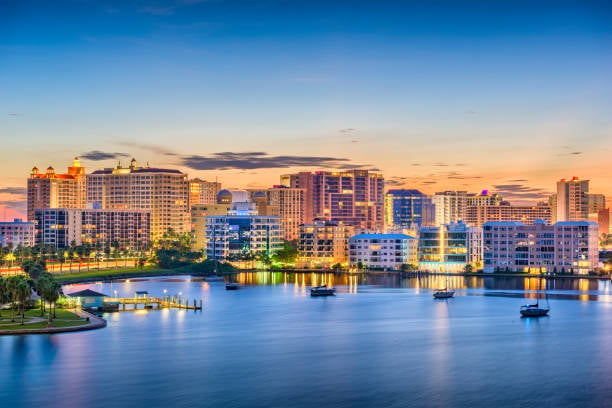
Relocating across borders is more than a transaction. It’s about creating the lifestyle you want, whether that’s sunrise beach walks on Siesta Key, boating afternoons, or evenings downtown for art, dining, and opera. With multilingual guidance and a clear, remote-friendly process, you can move forward at your pace and with full confidence.
Ready to map your personal timeline and tour Sarasota from wherever you are? Create Your Sarasota Lifestyle with Gigi Kuster.

Home Buying Tips
Buying a home is exciting — but understanding the full financial picture is where smart ownership begins.
Lifestyle
Beyond the beaches and sunshine — here’s what life in Sarasota really feels like.

Get assistance in determining current property value, crafting a competitive offer, writing and negotiating a contract, and much more. Contact me today.